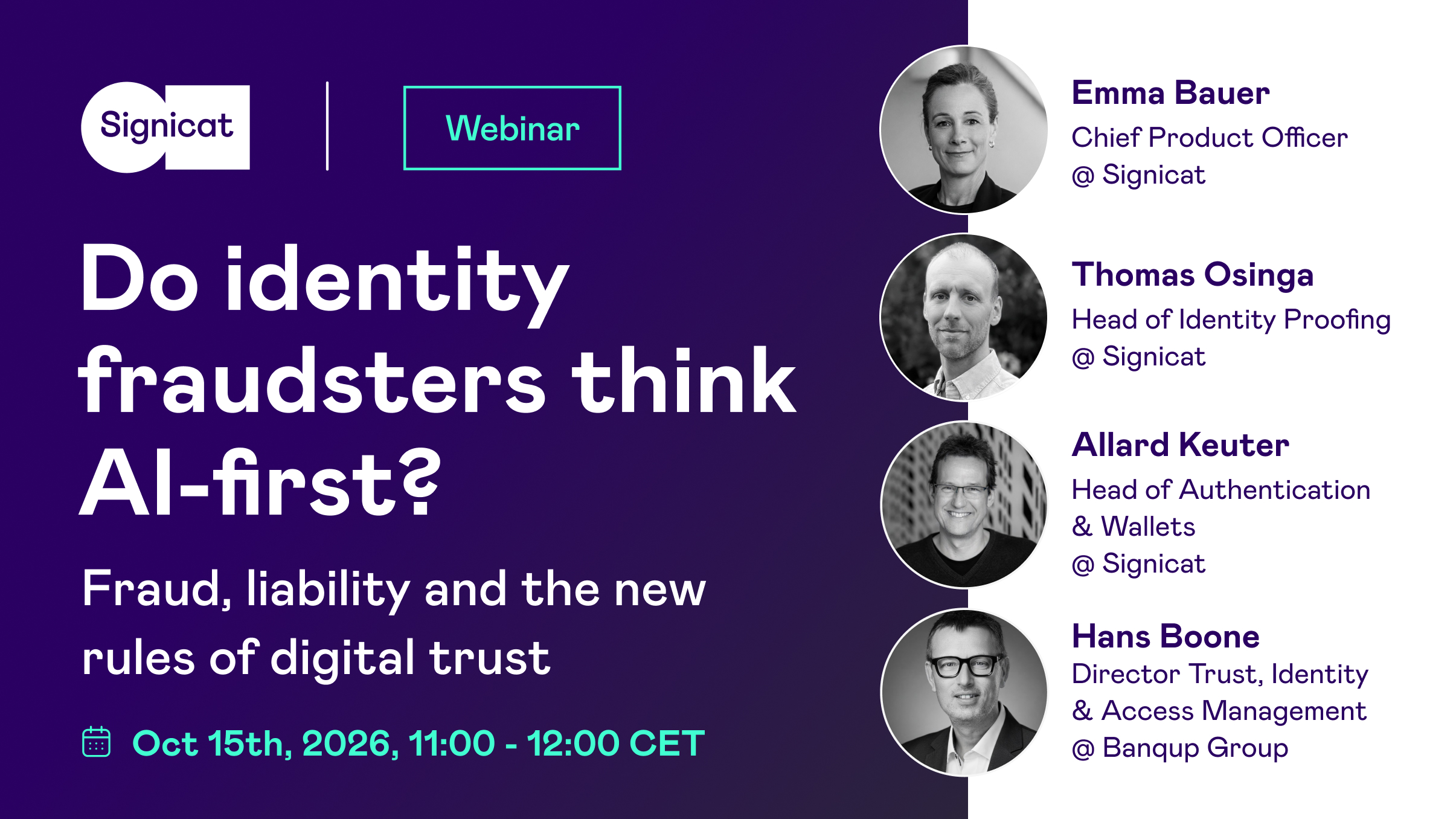
- When
- Type
- Webinar
- Language
- English
- Link
- Register to attend
Do identity fraudsters think AI-first? Fraud, liability and the new rules of digital trust
Join Signicat and Banqup Group to discuss how fraud is changing, who is responsible when it happens, and what businesses need to do next.
_
Date and time:
October 15th, 11:00–12:00 CET
Webinar overview
AI can find vulnerabilities, automate attacks and create more convincing scams. But that does not mean fraudsters have abandoned simpler methods.
In 2025, deepfakes fell to 2.6% of fraud, while presentation attacks rose above 13%. Proof that fraudsters use whatever works, from AI-generated deepfakes to social engineering and manipulated physical IDs. And as fraud changes, another question is becoming harder to ignore: who is responsible when it succeeds?
We’ll discuss questions that get uncomfortable fast:
- Is AI creating new fraud, or just speeding it up?
- Who pays when fraud succeeds?
- Should AI tools do more to prevent misuse?
- Should high-risk AI actions require ID checks?
- Can calls, texts and emails still be trusted?
- When does security start hurting conversion?
45 minutes of focused discussion and practical insights, followed by a 15-minute Q&A where you can bring the questions your team is dealing with right now.
Speakers:
- Emma Bauer, Chief Product Officer, Signicat
- Thomas Osinga, Head of Identity Proofing, Signicat
- Allard Keuter, Head of Authentication and Wallets, Signicat
- Hans Boone, Director Trust, Identity & Access Management, Banqup Group
Agenda highlights:
- How fraud is changing: How automation, organised crime and AI are making attacks faster and easier to scale, while traditional fraud remains effective.
- Who pays when fraud succeeds: Where responsibility sits between the user, the service provider and the technology provider, and how PSR/PSD3 could change the picture.
- Fraud in the real world: What a Norwegian court case, a card expiration scam and a deepfake attack tell us about how fraud works today.
- Can we still trust our channels?: Why calls, texts and emails are increasingly easy to spoof, and where verified, device-bound identity fits in.
- Security without killing conversion: How behavioural signals and background risk detection can catch suspicious activity without putting every genuine customer through extra checks.
Who should register
For fraud, risk, security and product teams across banking, fintech, payments and digital services who want a clearer view of how identity fraud is changing and what to do about it.