The rise of the Indian ePassport
The nationwide rollout of India’s next-generation ePassports with electronic chips is accelerating rapidly and Signicat is seeing a clear upward trend in the number of Indian ePassports verified remotely by businesses and government authorities around the world. For organisations conducting identity verification or KYC, this creates an opportunity to verify Indian users remotely, with greater confidence in the authenticity of their identity documents. Here is a breakdown of this interesting development and what it means for organisations verifying Indian citizens.
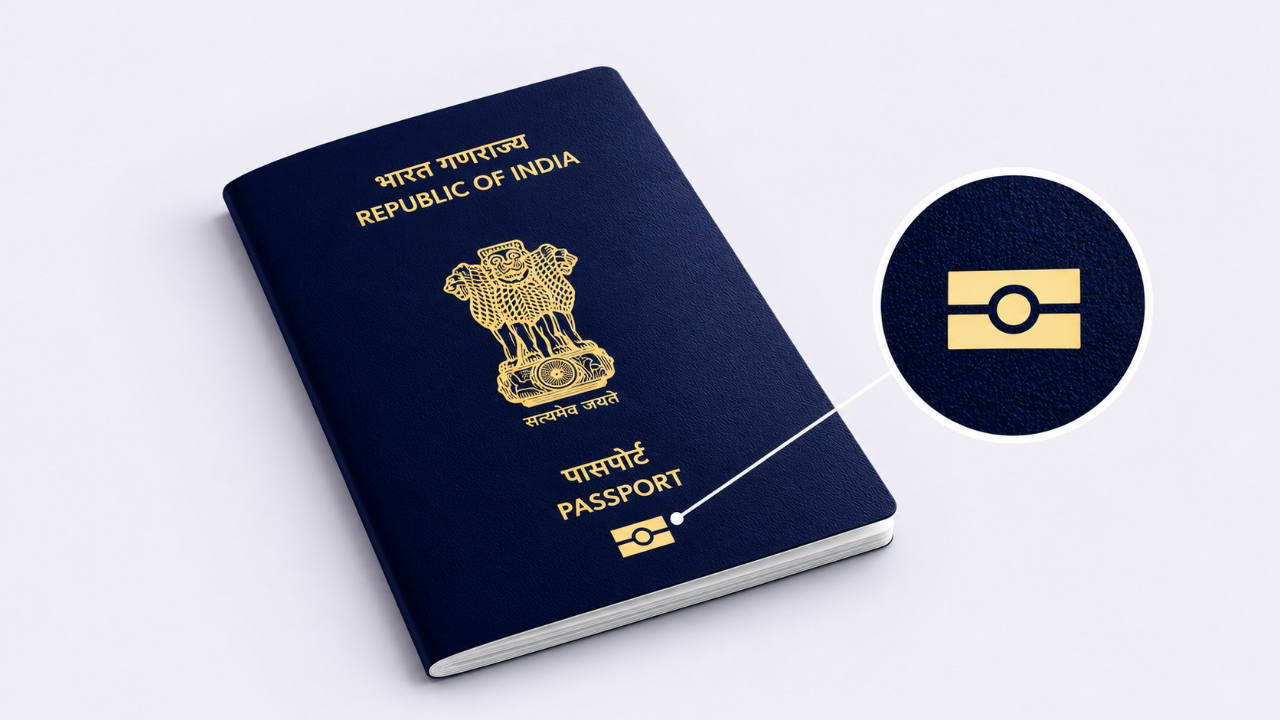
India is rolling out a new generation of passports with an embedded electronic chip containing digitally verified personal and biometric information. The Indian government says the ePassport is designed to make passports harder to forge and easier for authorities around the world to authenticate.
From the first pilots in 2024, when it was launched for ordinary Indian citizens to the full national rollout in 2026, more than 17 million e-passports have already been issued in India and abroad.
Yet this could be just the beginning. While estimates suggest that less than 10% of India's population currently holds a passport, India is home to around 1.5 billion people. That makes it a potentially enormous market for ePassport adoption.
The journey: From a quiet pilot to a nationwide surge
India's transition to ePassports did not happen overnight, but the adoption is now accelerating rapidly.
- 2020 : The Foundation
The rollout began at the government level, with 20,000 diplomatic and official ePassports issued by August 2020.
- 2024 : The first pilots for ordinary citizens
On April 1, 2024, India quietly launched its first pilot for ordinary citizens. Beginning in regional hubs such as Bhubaneswar and Nagpur, the programme marked the start of wider public adoption.
- 2025: Regional Expansion
Momentum continued to build as larger states joined the rollout. Tamil Nadu, for example, began issuing ePassports in March 2025 and issued more than 20,700 in its first month.
- 2026: The Nationwide Surge
India officially initiated its full, country-wide ePassport rollout.
Real-Time Proof: The ReadID analytics spike
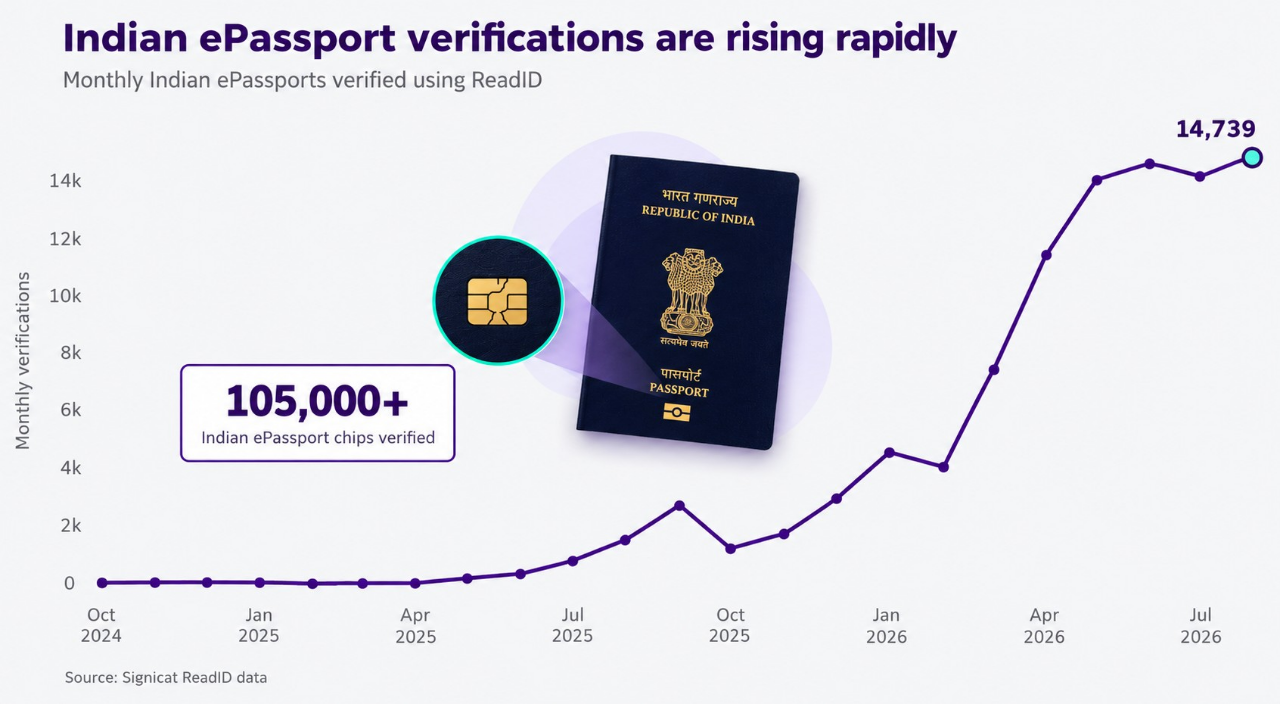
This is no longer a future trend, it is happening in real-time. Since Signicat began tracking the rollout in September 2024, our NFC-based passport verification product ReadID has been used to read and verify over 105,000+ Indian ePassport chips globally.
And the increase is striking.
Our analytics show a dramatic, almost vertical spike in active Indian ePassports read from February 2026, aligning with the launch of the nationwide rollout.
As millions more Indian citizens receive ePassports, businesses and government authorities around the world are likely to encounter these documents increasingly often in their identity verification processes.
What’s inside the Indian ePassport chip?
The Indian ePassport chip embedded in the back cover of the passport booklet contains information including the holder's name, nationality, date of birth, sex, passport number, passport issuing country, passport expiry date and a high-resolution facial photograph.
There is an added layer of security as the data in the chip is digitally signed by the issuing authority, allowing organisations to cryptographically check that the information is authentic and has not been altered. This makes sophisticated document forgery significantly harder. This also makes the ePassport much more secure than a traditional passport.
The opportunity for governments and global businesses: Verify Indian citizens remotely with greater confidence
The rapid adoption of e-passports by Indian citizens is significant for more than just international travel. For governments and businesses verifying Indian citizens, it represents an opportunity on two fronts: more secure identity verification and a very large potential user base.
A more secure source of identity data
For banks, fintechs, insurers, telecom providers, marketplaces, government agencies and other organisations conducting identity verification or KYC, the Indian ePassport provides a more secure source of identity data than relying on the visual passport page alone.These documents are much harder to fake as the data on the chip is cryptographically protected.
This means organisations can remotely verify not just what a passport says, but also the authenticity and integrity of the data it contains.
A large and increasingly relevant user base that can be verified remotely
The scale of the opportunity is equally significant.
India has a population of around 1.5 billion and the world’s largest international migrant population by country of origin, with an estimated 18.5 million Indians living outside the country according to World Bank data. According to the India’s Ministry of External Affairs, as of August 2026, more than 17.3 million e-passports have reportedly been issued in India and abroad.
As India’s ePassport rollout accelerates, millions of these more secure identity documents will increasingly be presented to governments and businesses both within India and around the world.
For organisations serving Indian customers, this creates a growing opportunity to verify identities remotely with greater confidence in the authenticity of the passport being presented.
ReadID: Read and verify identity data from Indian ePassports
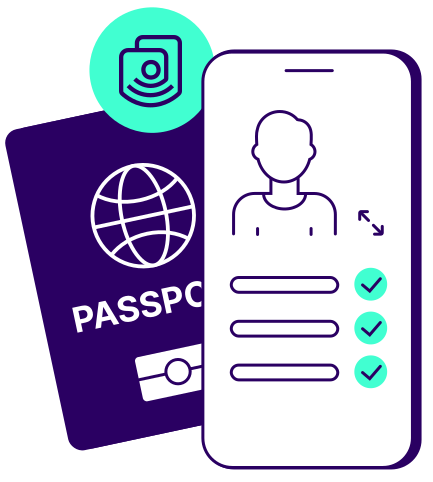
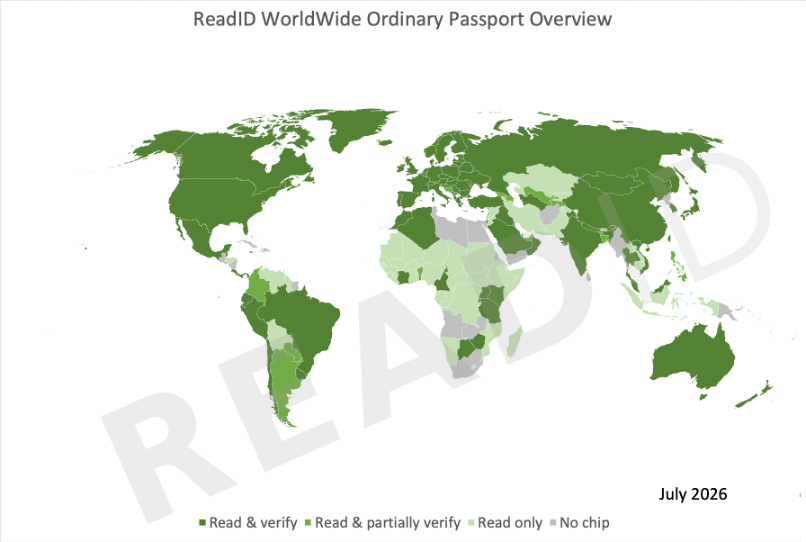
Using Signicat’s ReadID, businesses and government authorities can remotely read and verify Indian ePassports and other chipped identity documents from 181 countries using a smartphone’s NFC capability. ReadID securely reads the personal and biometric data stored on the document’s chip and cryptographically verifies its authenticity and integrity, helping organisations establish that the document is genuine and that the data has not been altered.
Indian ePassports conform to global standards established by the International Civil Aviation Organization (ICAO) for electronic passports. So whether an ePassport is issued by India, Germany or Denmark, the information on its chip can be read and cryptographically verified in a standard way.
This makes ePassports particularly useful for organisations that need to verify identities across borders.
The technology is trusted by governments, financial institutions, and other businesses that need to verify the authenticity of an ID document with a high degree of assurance.
The UK Home Office uses ReadID as part of its Generic Identity and Document Verification (GIDV) programme. Applicants for services including the UK Electronic Travel Authorisation (ETA) can verify their identity remotely using a mobile app that reads and verifies the chip in their ePassport, instead of having to present or send their identity documents in person.
As India puts ePassports into the hands of millions more citizens, the technology opens new opportunities for organisations around the world to verify Indian identities remotely with greater confidence.